|
THINGS TO DO IN VALLICO SOTTO
Eating
-
Eat at one of the resturants in the TTI restaurant guide.
-
Take advantage of the fact that the monastery has its very own cookbook - The Il Collegio Cookbook written by former owner Leonie Whitton - and a very nice kitchen.
- Vallico Sotto's own restaurant closed sometime in the late 1990s. If you want a change of career, the restaurant is still there complete with cookers and tables - please open it up again. Reopen Vallico's little shop as well (this closed in Dec 2007) and make a proper business empire out of it.
Very strenuous activities
-
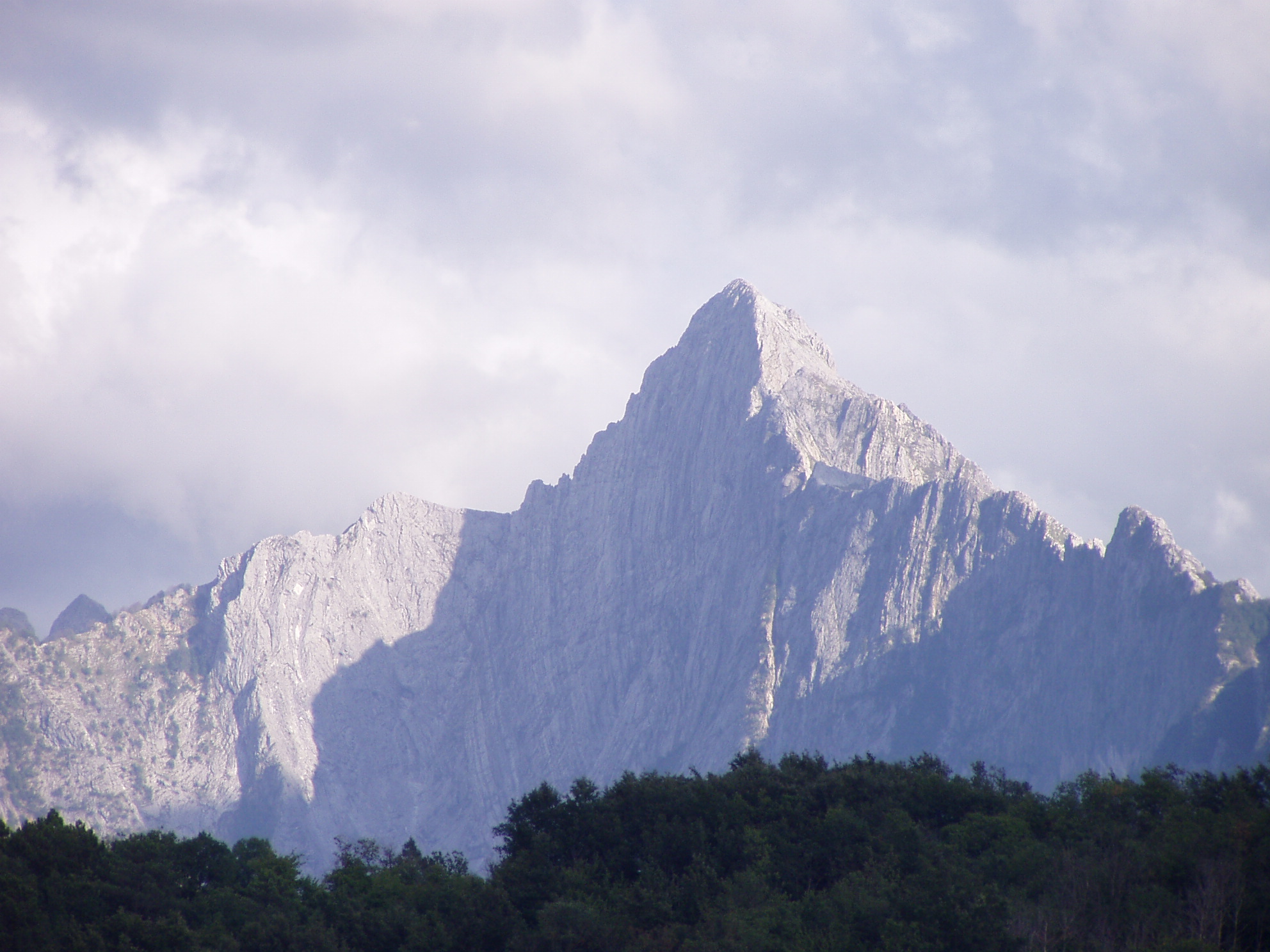
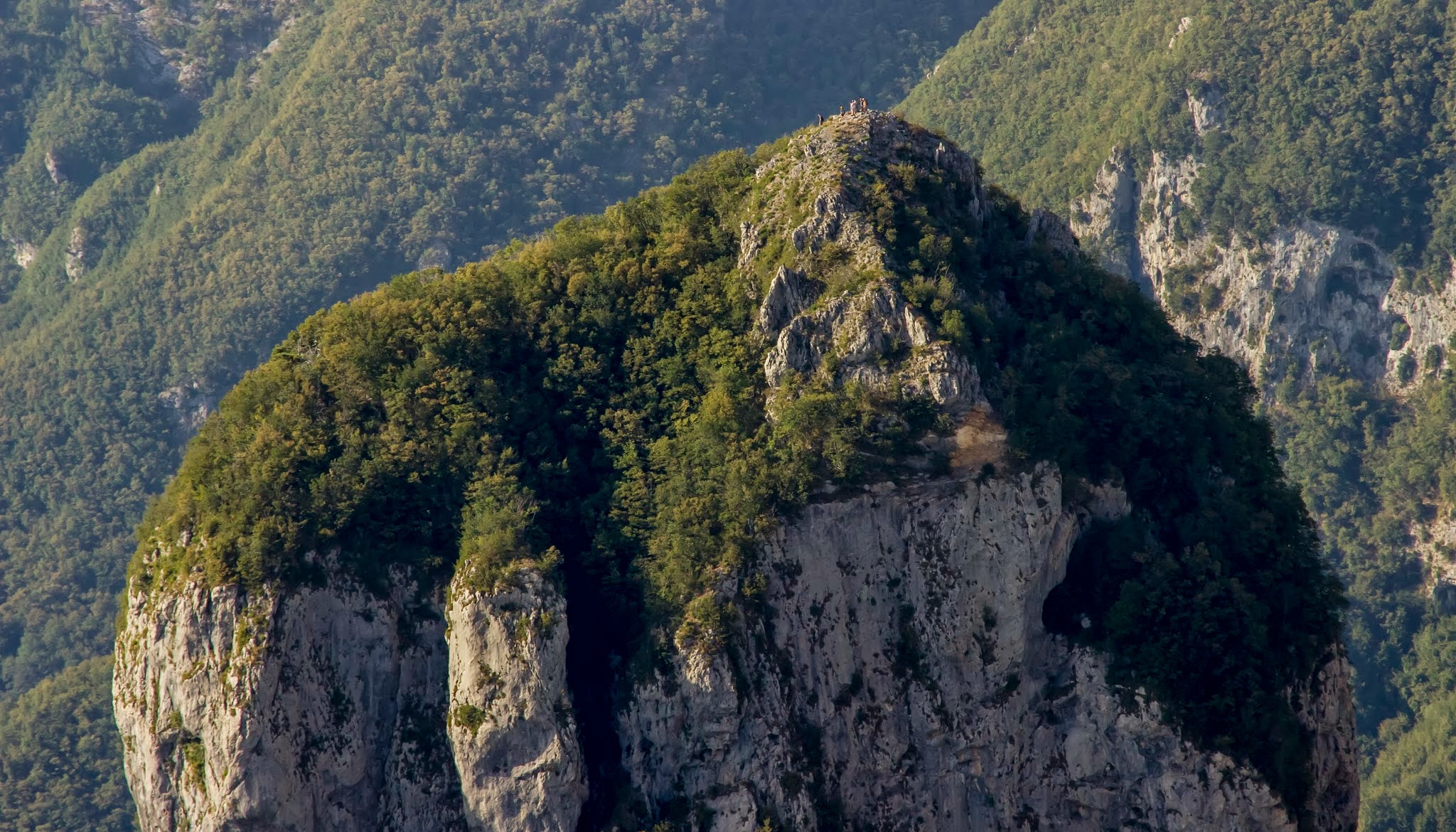
Climb the peak of Pizzo d'Uccello.
Requires early start with no other activities.
See photo. Enough said. They don't call it the `Matterhorn of the Apuan Alps' for nothing.
-
Climb the peak of Monte Procinto. This is a huge cylindrical rock tower with a belt of trees around its middle from which rise 300 metre walls, overhanging on every side. Did you know that Michelangelo had the idea of carving it into a gigantic scultpure along the lines of Mount Rushmore? Well he didn't in the end, but you can see the mountain either at the top right of this page or, in close up, here . Yes -
the walls are more or less vertical, but there is a via ferrata to clip yourself onto. Instruction, assistance, and the necessary equipment can usually be supplied. No climbing ability required other than a head for heights and the ability to climb a ladder.
-
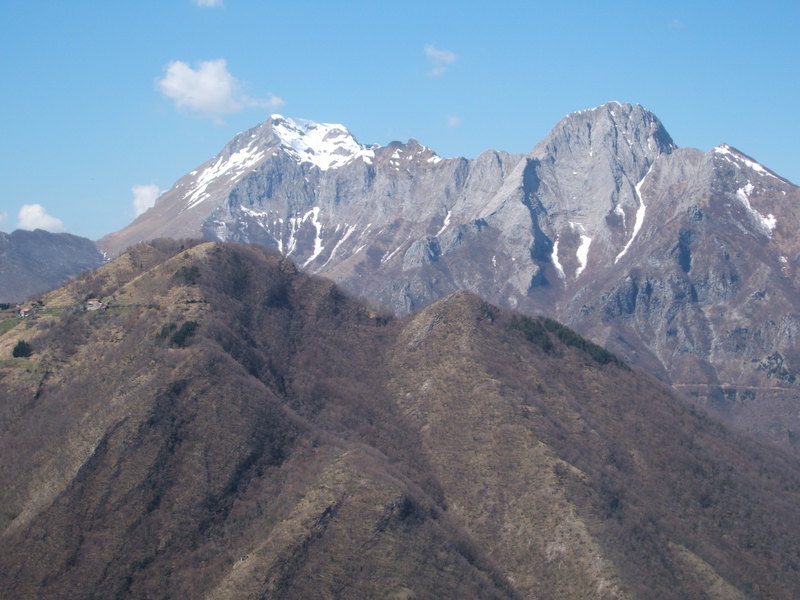
Reach the high peak of Pania della Croce from Piglionico (described as
`The finest peak in the whole of Italy' in Below the Snow Line - one of
the 19th century books in the TTI Antiquarian Library). Also features in
Dante's Divine Comedy. This defeated some of TTI finest mountaineers
for several years before they finally succeeded in 2007 (it isn't that
hard if you move quickly).
-
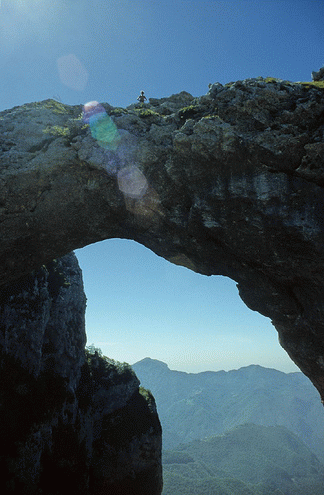
Find the spectacular natural rock bridge of Monte Forato (under which
someone once flew an aeroplane).
Start from Fornovolasco (lots of up) or from
Matanna (much easier) or even have two groups that meet in the middle and exchange car keys. New for 2009: there is a fun via ferrata traverse on the way to the arch from Matanna, and we will do a new route via Foce di Valli.
-
Navigate the 12 waterfalls of the Crystal Canyon (a.k.a. the Rio Selvano)
just below Vallico Sotto. You can see a video of some people doing this here.
-
Find the Neanderthal cave (Grotte all'Onda) down the slope from the
balloon station near Matanna. "This vast grotto stretches 40 x 60 meters and it
originally hosted numerous internal tunnels, which are obstructed today. Its
enormous cavity offers important evidence that suggests the frequency with
which people entered the grotto, from pre-historical times to more recent
periods. The first people to use the cave were Neanderthals; they hunted
throughout the surrounding area and probably used it to hoard their tools and
weapons, together with the bones of the animals they cooked.
Hunters from the Superior Palaeolithic period (Homo Sapiens) lived in the more external part of the grotto where they set up a giant hearth. Later, Neolithic farmers and shepherds planted their huts in the shelter of the grotto's vast vault, carrying out their daily activities there during many seasons. This cave was also used during the Neolithic period (the Bronze Age), during which new models were developed for decorating ceramic. During this period, new raw materials, imported from distant locations, were adopted to make special equipment. From the post-Bronze Age until recent times, the grotto was not continuously frequented."
-
The new Geoscopio web site (link/instructions here) shows precise locations of all of the thousands of caves in Tuscany (even the crap ones) together with a brief technical
description and a plan of the cave. Interesting little expeditions may be made
that have the aim of finding the entrance to particular caves, as well as exploring them. The Apuan Alps have more caves than you can possibly imagine, so this will still be a viable activity in 2050. In particular, ask Mike about the untried Campolemisi, Fabbriche di Vallico, Motrone, Coreglia, and Antro della Paura expeditions.
-
Explore the canyon of the Turrite di San Rocco river. This starts from the fork in the river upstream from Fabbriche di Vallico before you get to Gragliana. Take the left-hand fork. The aim is to go all the way through it to take coffee at the cafe near the Chiesa di San Rocco in Turrite. Be prepared to get wet. There is a great natural swimming pool in there. Once reaching the village where the cafe is (there is also a children's playground and a nice river) you will have to bribe a local (pool your Euros) to give your driver a lift back via Focchia to your van. Use your initiative here.
-
Mike has recently bought the Italian book The ninety caves of Fornovolasco and
is currently translating it into English. In the meantime here's Di Alcune Grotte.. from the Buffardello people. These caves litter the slopes of
Pania della Croce and the various other mountains surrounding the little
village of Fornovolasco in the next valley along from ours. How many of these
can we find? Dare we enter the 'Garfagnana Abyss'?
-
Orrido di Botri canyon walk. The Orrido is a giant canyon
created by the Pelago river in the Appenines (about an hour's drive from the
Institute) with deep steep walls as high as 200 metres and in some places only
a few metres apart. This is a geologists' and naturalists' paradise. It can
only be visited with helmets and suitable clothing you don't mind getting wet.
-
Have a fun morning workout. Run from the Institute each
morning at 6am to the spectacular summit of Monte Palodina then all the way back down again in order to tone up
your thigh muscles and pep yourself up for the day ahead. Elevation change: 600m.
-
Complete the Cinque Terre coastal walk, a four hour excursion through some of Italy's most spectacular scenery.
-
There are of course any number of spectacular high mountain expeditions
in the Apuan Alps and the Institute has a library of guidebooks which you can
browse through. Let me know if you want to try anything else (that will fit in
the clearly limited amount of time). There is also the TTI Antiquarian library (Mountaineering section) to inspire you.
Quite strenuous activities
-
Go to Alta Matanna at the end of the Turritecava valley and visit the beautiful
nineteenth-century hunting lodge that was once the destination for travellers in
Rosetta the Balloon on her aerostatic cableway.
See the old balloon station at Foce del Pallone and the extraordinary view. On clear days you can see Elba - 100 miles to the South - and sometimes the even more distant Corsica and the French Alps. Come back over the top of Monte Matanna and descend back to the lodge. Take one of the Institute's antique telescopes with you.
-
From the Matanna hotel, climb up to the cross on the adjacent ridge for
a spectacular view of Monte Procinto, Stazzema and the Apuan Alps. From there you can climb Monte Matanna the other way around, or visit the donkey and his little horse friends who live on the top of Monte Nona. Or you could go on a longer walk below the Giant West Wall of Nona, threading past Monte Procinto, and round the back of Monte Nona which will take several hours. Finish up the day with a fabulous dinner in the Matanna hotel.
-
From the Matanna hotel, climb up to the cross for a spectacular view of Monte Procinto, Stazzema and the Apuan Alps. From there you can climb Monte Matanna
the other way around, or visit the donkey and his little horse friends who live on the top of Monte Nona. Or you could go on a longer walk below the Giant West Wall of Nona, threading past Monte Procinto, and round the back of Monte Nona which will take several hours. Finish up the day with a fabulous dinner in the Matanna hotel.
-
Take part in the latest expedition to the ancient cave known as the
Tana di Cascaltendine which is the subject of Pietro Magri's 1880 book
An expedition to Mount Gragno and the Cave of Cascaltendine as
translated by Mike and available here.
A 2007 TTI summer school crew were able to photograph the result
of the following quote: 'Before coming down from the cavern we used a chisel to inscribe our initials and the year 1880 on both walls of the passage near the entrance.'
This was done in the "Palace of Ismeno" which was the name Magri's group gave
to an extensive cave whose entrance is a six-foot hole about forty feet up a
cliff - the full story is on the News from the Towler Institute blog.
It is also known that the cave continues for a kilometre beyond where
we have penetrated before and this remains to be explored (note that in summer
2007, Mike and Evans went up the big wall in the final chamber with the dangling rope - a place many TTI visitors have visited before - with somewhat amusing conesquences - see the blog story 'Bronze
Hermaphrodites and the Fat Boy Filter'). Expedition to be followed by cold
beers and refreshments in the lovely village of Cardoso, or a circuit of Monte
Penna hunting for the lost Cave of the Fairies..
-
Visit the Selva del Buffardello adventure park. I quote from their web site: "Among the centuries-old fir trees some acrobatic forest paths, open to everybody, have been created and their aim is to show the wood from a different and adventurous point of view: hanging in the air.
It is a challenge for children, youth and adults, who can test their ability with suspension bridges, swinging beams, vertical nets, ropes and obstacles, finding again their lost adventurous spirit.
The Adventure Park `Selva del Buffardello' in San Romano in Garfagnana (locality Pra' di Lago) is a real novelty in the Appennino Tosco Emiliano.
An old wood of two hectares and a half in the heart of Garfagnana, near the natural `Parco dell'Orecchiella', with a wonderful view on the Alpi Apuane and on the Fortezza delle Verrucole (old castle).
The park entrance is free if you don't practise in the adventure paths."
-
TTI management has discovered that there is a secret underground tunnel in Vallico which starts from
the Doctor's House next door to the Institute (a former barracks) and
which goes up to the Rocchetta above the village (the site of an old castle on the summit of a little hill, where we now pitch the Bedouin Tent). This was
used in mediaeval times for escape from the frequent warfare so common in
these parts. The supposed entrance to the tunnel was bricked up (we think) in
the 1930s - there are a couple of elderly men in the village who vaguely
remember it. This summer we hope to unblock the entrance and explore.
We also wish to find the upper entrance, so if you know anyone who has a
ground-penetrating radar set we can borrow, let us know. This will probably
be one of the next thrilling tales in "News from the Towler Institute".
-
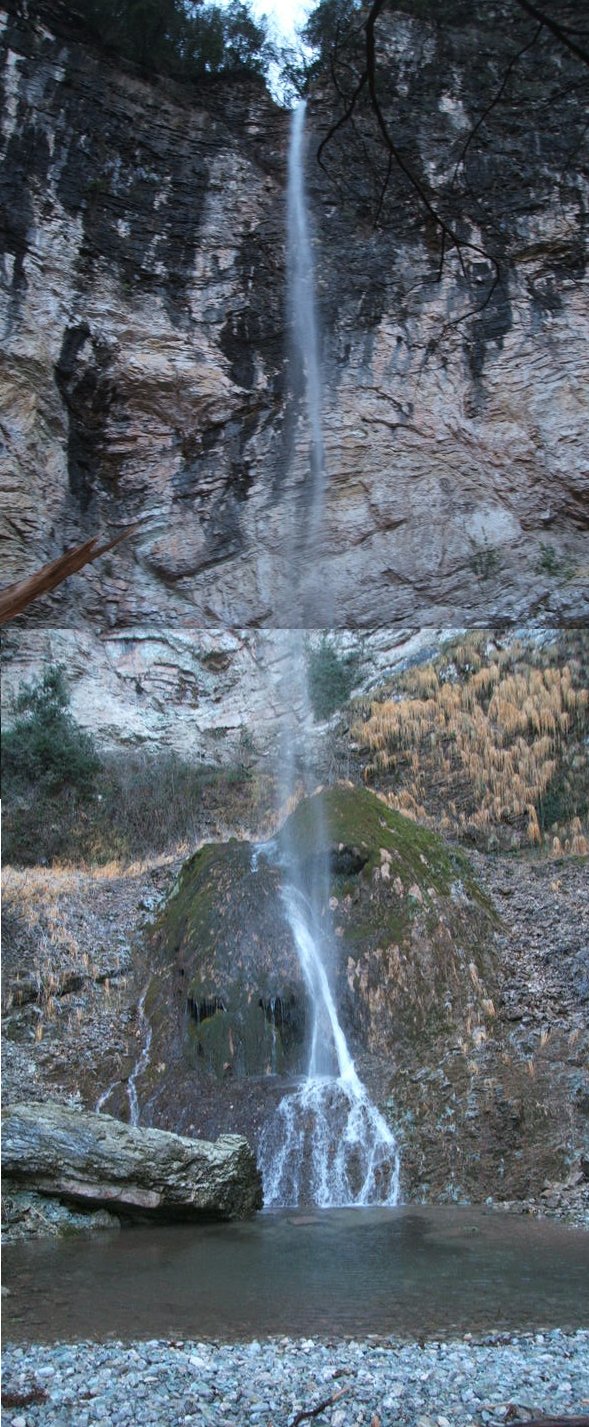
Explore the Vallico Sotto mule trail and the spectacular forgotten
waterfall of Cascata Pendolina - one of the higher waterfalls in Italy. Vallico was only
connected by road to the outside world in the 1960s - before then people went up
and down the mule trail. This has now been practically forgotten and is a little
overgrown but is still very
beautiful. Once we reach the bottom of the valley we will head over the river to
the site of the Cascata Pendolina where will take lunch. On the way back the
bravest people will try to ascend the Canyon of the Pili (The Rio Selvano river is coming the other way - so you will get wet!). EDIT: and they will fail - I have recently discovered the only way you can feasibly do this is to descend from the top. Apparently this canyon is quite famous - the Apians group from Castelnuovo organize tours through it. One of these days I will have to attach myself to one of these expeditions to learn how to do it. Apparently there are 12 major waterfalls to descend - photos and rough maps are linked from the Mountaineering page of the web site.
-
Explore the Buca della Freddana cave near the
mule trail from Vallico Sopra to San Luigi. This was
(re)discovered by Mike in Easter 2007 following conflicting and confusing advice from several
local old ladies who remembered its existence from 40 years ago. He has also found the upper entrance of the same cave on the summit of Monte Penna - the two are apparently connected by a 1 kilometre passage. The old ladies have advised us not to
go inside because of the evil monsters and dark pits that lurk within, but then
again, they always say that. Dare you explore?
-
Five a side-football (a new fenced pitch was constructed in Vallico
a couple of years ago) or regular football (on the local full-sized pitch).
-
Rock climbing or low-level bouldering - the Institute should have some ropes
and climbing equipment. Don't forget to bring climbing boots and a harness that fits if you want to do this seriously.
-
Pietro Magri in his 1880 book mentioned above states that there are two
other caves in Monte Gragno besides the Tana di Cascaltendine. Today no-one
seems to know where they are. Having found the Buca della Freddana, Mike has narrowed down the lost ``Cave of the Fairies'' to a relatively small area. Can you find it?
-
Traverse from Santa Luigi via Monte Palodina and the spectacular cliffs of
Monte Gragno past the giant karst depression of Pian di Lago to the spectacular
Rocca Estense fortress of Trassilico.
-
Explore the Tana che urla (the Cave that Screams!) - first
explored and scientifically described by Vallisneri in 1726 - off the footpath
to Foce di Petrosciano from Fornovalasco. This isn't a tourist cave suitable
for your mum - so bring some appropriate clothes and torches. By the summer the
Institute should have some proper speleological equipment to hand round. If you
can read Italian, have a look at the document ..di alcune grotte della Garfagnana nella storiografia e nella tradizione populare.
-
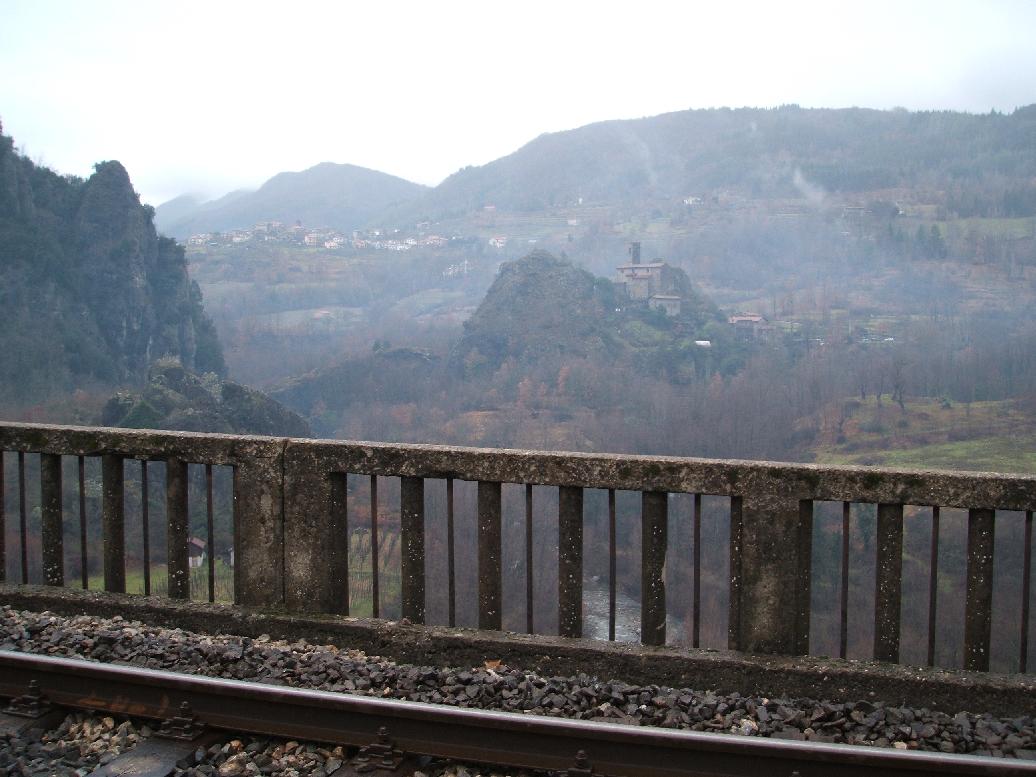
Go on a lovely walk over the highest stone railway bridge in Europe to the church in Sambuca.
-
Go wild boar hunting.
- Learn to play local sport palla elastica (elastic ball).
- Go kayaking on the Turritecava. Bring your own canoe.
-
Use TTI's two inflatable boats to play on the Turritecava lake - accompanying picnic recommended. Have races. Try to find the Buca del Lago della Turrite Cava (as you sail towards the dam, it is on the left just after the exit of the second road tunnel.
-
Explore the ancient Vasaio di Motrone cave near the nearby village of Motrone (see here and here and here).
Relaxed activities
-
Swim in the Institute's swimming pool. New for 2018!
-
Visit the Pinocchio park, the Garzoni gardens, and the Collodi butterfly house in Collodi. See here. From the website: "Inaugurated in 1956, the Pinocchio Park is no ordinary theme park, but rather a precious masterpiece created by artists of great character working together. The literary itinerary, marked out by mosaics, buildings and sculptures set amidst the greenery, emerges from an inspired combination of art and nature. The path is winding, and the dense vegetation means that every stage on the route comes as an unexpected surprise, with the very plants and trees contributing to create the atmosphere and the episodes in the story of the Adventures of Pinocchio. The Park itself is the site of constantly renewed cultural activities that are always mindful of its roots: exhibitions of art and illustrations inspired by children's literature and the Story of Pinocchio, puppet-making workshops, puppet and marionette shows and minstrels enliven the visit to the Park, depending on the season. ''. For the gardens: ``The historic Garzoni Garden, one of the most beautiful in Italy, represents a felicitous synthesis between Renaissance geometry and the spectacular quality of the nascent Baroque. The garden is a work of art of rare equilibrium, where the greenery, the flights of steps the water plays and statues form a truly unique ensemble. It is an absolutely unforgettable experience to lose oneself amidst the wonders of this fantastic place: grottoes, theatres carved out of box hedges, statues representing mythological creatures, satyrs, female figures, greenhouses with peacocks, forests of bamboo. An ancient, and somewhat arch tradition considers the visit to be propitious for lovers, and not only on account of the leafy shade and the arbours that offer secluded spots for tender caresses, but also of the maze, a symbolic allusion to the path to follow together throughout life. As soon as we enter the garden we come upon delightful parterres, statues and two large circular pools. Proceeding we then reach two magnificent double ramps of steps featuring a complex hydraulic system that supplies the water plays. These steps lead to the three upper terraces. Beyond is the impressive water staircase, flanked by two female statues representing the eternal rivals Lucca and Florence. At the very top is the statue of Fame blowing into a shell, emerging from which a jet of water traces out a lofty arc. Leading off the main route through the garden are numerous side paths and avenues where we can discover its marvels among the fragrances of the different plants, the plays of light and shade of the vegetation, the intrigue of the mazes and the enchantment of the sculptures. The garden has recently been restored."
-
Look in the latest issue of Grapevine magazine for local cultural
activities and concerts etc.. - in English!
-
Play with the Institute's Victorian Scientific Instrument Collection.
-
Spend the afternoon bathing in the outdoor hot pool at the
thermal baths of Bagni di Lucca (one of the most fashionable spots in Europe in
Lord Byron's time - the Switzerland of Tuscany!). Followed by shopping,
sightseeing and coffee in the town centre.
-
Samantha has two other favourite open-air pools at Gallicano and Barga.
These are like little beach resorts where one lazes about on deckchairs and has
the occasional dip.
-
Watch the night sky through the Institute's astronomical telescope.
-
Visit the ancient city of Barga for an
afternoon's relaxed sightseeing, shopping and culture. In the summer there are Opera and Jazz Festivals.
-
Visit the beautiful city of Lucca. (Many reasons!)
-
Visit Castelnuovo di Garfagnana, where you can find Andrea's (the 'Indiana Jones of the Garfagnana') famous Osteria, where all day you can sample fabulous local wines, cheeses and snacks.
-
Follow in the footsteps of Michaelangelo, and visit some of the Apuan
Alps famous marble quarries.
-
Day trip to Florence.
-
Drive to the next valley along from ours over a spectacular high mountain
road where the eagles live. Visit the Grotta del Vento - the Cave of the Winds. This is the most famous cave system in
Tuscany and the visitor will enjoy a spectacular and bizarre landscape of
caverns and lakes. Take a pullover as the temperature is a reliable 10 degrees
the whole year round. Then head down the valley to visit the Eremo di
Calomini - an ancient monastery built into a high steep cliff.
-
Table football and drinking in Fabbriche di Vallico.
-
Horse riding at La Fornace.
-
Various mild short walks around the Institute.
-
Digging the Institute garden and doing little DIY things like restoring
the church or clearing paths (I say this merely in hope..).
Very relaxed activities
- TTI now has a high-definition video camera. Make a film of life at
one of the world's best conferences.
-
Budding archaeologists may use the TTI metal detector - bought following
last year's spooky event when Evans and Mike were digging a hole in the
ground for the satellite dish (I'm really not making this up):
MIKE: Hey Evans, watch out for crucifixes when you're digging that hole. This
used to be a monastery you know.
EVANS (REACHING INTO THE HOLE) What, like
this one?
(HOLDS UP A THOUSAND YEAR OLD BRONZE CRUCIFIX FROM FIVE FEET DOWN).
-
Spend all day in the TTI garden relaxing in one of the Institute's
three hammocks, drinking wine, snoozing or reading one of the books from
the TTI library.
-
The Institute has a variety of board games, jigsaws, and similar
entertainments together with a number of Victorian books with titles like
"What To Do On Cold Winter Evenings Given That We Haven't Invented Television Yet".
-
Debate physics or whatever you happen to be interested in with the help of the Institute blackboards.
-
Listen to one of Mike's tedious lectures inspired by the contents of the
TTI Antiquarian Library such as Richard Burton and the Source of the Nile
(Burton the Victorian explorer and polymath, not the Welsh actor out of Where Eagles Dare..) or Up The Orinoco with Alexander von Humboldt.
-
Mike is translating some chapters of a book on the history of Vallico Sotto.
If he's finished it by the time you visit, then walk around the village
looking at the buildings and places it describes.
-
Spa treatments in the Bagni di Lucca "Thermal resort".
-
MDT has taken to writing stories about events at the Institute and publishing
them on his blog at the local Barga News website. See barganews.com and the News from the Towler Institute blog
So far these are mainly about cave explorations and similar adventures.
However, Mike doesn't have a monopoly on this. If you wish to contribute
your literary efforts then please send your stories about your adventures in
Italy to him, and they will be published on the blog.
General
-
The Institute has a wildlife photography notice board upstairs on the top floor. Prizes for
the best entries, particularly if you can take a picture of
one of the eagles that regular soar above Vallico or of the elusive
marmite.
-
The Towler Institute Exploration Society also has a photographic competition running.
-
Revitalize the economy of Vallico Sotto. It's only about 70 years since 700 people lived here. Now less than 100 do so. Just because modern lazy teenagers want to be fashion models smoking drugs in Milan rather than having a nice healthy outdoor life, the population of rural Italy has been denuded. Let's bring back the time when all the mountain terraces were in production, packs of nice mules helped carry things, teams of volunteers kept paths and bridges open, and everyone knew how to bake chestnut cakes. All serious suggestions gratefully received.
|